
 By admin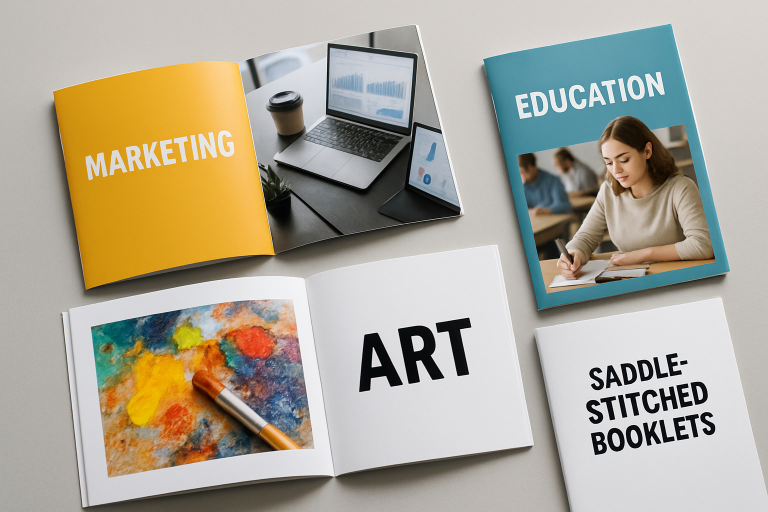
Across industries ranging from marketing to the arts, saddle-stitched booklets have become a staple for organizations seeking effective, affordable, and visually compelling printed materials. The technique of saddle stitch printing binds pages together with simple wire staples along the fold, making it both cost-effective and flexible for a wide variety of uses. Whether for company brochures, educational handouts, or creative portfolios, this method provides a polished and professional finish that suits a range of business needs. For those seeking to create materials quickly without compromising quality or craftsmanship, saddle stitch printing emerges as a practical solution.
What truly makes saddle-stitched booklets so popular is their unique combination of affordability, fast turnaround times, and customization options. They can be produced in small or large batches, making them accessible for projects of all sizes, from a local nonprofit’s annual report to a national retailer’s seasonal catalog. Their lightweight construction makes them easy to distribute. At the same time, their sleek, flat-folding design allows for flexible layouts, vibrant graphics, and impactful visual storytelling—all critical for capturing audience attention in print. The blend of utility and aesthetics has allowed these booklets to remain relevant, even in an increasingly digital landscape.
Customization plays a crucial role in maximizing the benefits of the format. Companies and creators can tailor every element, from the choice of recycled paper or metallic finishes to intricate graphic design elements that complement brand identity. This level of control empowers organizations to make memorable print collateral that stands out at events, enhances educational experiences, or elevates creative displays.
The impact of saddle-stitched booklets goes beyond aesthetics and budget. They offer a tactile, personal way to communicate with audiences that digital media can’t fully replicate. As sustainability becomes a growing concern, selecting the right materials and printing partners also reflects an organization’s values, supporting initiatives to reduce waste and invest in responsible production.
Marketing and Promotional Materials
Businesses rely on saddle-stitched booklets to deliver concise, visually engaging marketing materials that customers actually want to keep. At trade shows, conferences, and community events, these booklets strike the perfect balance between substance and simplicity. Their ability to be produced in various sizes means that marketers can showcase everything from detailed product catalogs to quick “about us” overviews in a format that’s easy to distribute and even easier for readers to flip through. Innovative marketing often integrates interactive features—such as QR codes, tear-away coupons, or bold infographics—within the booklet, ensuring recipients have multiple touchpoints that lead them deeper into the brand experience.
The flat-lay design of a saddle-stitched booklet is especially beneficial for guides, brochures, and instructional pamphlets, where visual continuity is crucial. Marketers take advantage of the ample layout space to craft persuasive messaging paired with compelling imagery, using the physical nature of print to capture—and hold—the reader’s attention longer than most digital advertisements.
Educational and Instructional Use
Educators from elementary schools to universities appreciate the durability and adaptability of saddle-stitched booklets. They are an ideal solution for distributing class syllabi, lab manuals, student handbooks, or extracurricular activity guides—essential documents that students frequently need to reference. Since the booklets are bound simply but effectively, they can withstand frequent handling in classroom or field settings without pages easily falling out, making them a practical choice for busy academic environments.
This format isn’t limited to text; many schools use custom booklets for art projects, science fair programs, and yearbooks, benefiting from the ability to include full-color photographs, student artwork, and vibrant layouts that engage a visually driven generation. Personalized print materials can help enhance learning retention and foster a sense of inclusion among students, particularly when the content is designed to reflect their experiences.
Creative and Artistic Publications
Saddle-stitched booklets are a cornerstone in the world of independent publishing and the arts. Small presses, self-publishing authors, zine creators, and visual artists regularly choose this method for its handmade feel and the freedom it offers creatives to experiment with format and presentation. Zines, poetry collections, and photo essay booklets thrive within the saddle-stitched paradigm, where nontraditional sizes and page counts are not only possible but encouraged. The ease of production lowers entry barriers, enabling artists to engage audiences directly, often creating limited-edition pieces that become collectibles in their own right.
This format also supports creative risk-taking—unusual foldouts, interactive inserts, or even hand-drawn covers can be combined within a single saddle-stitched edition to produce one-of-a-kind mementos. The straightforward assembly process allows for quick turnaround and on-demand runs, ensuring that creative work can adapt to changing ideas or immediate event needs.
Enhancing Design with Special Finishes
Designers who want booklets to leave a lasting impression often leverage special printing finishes, such as spot UV coating, foil stamping, and embossing, which are increasingly used to add visual drama or tactile interest to covers and key interior pages. These enhancements guide readers’ attention, highlight logos, or set certain information apart, while also reinforcing the booklet’s perceived value—important for portfolios, luxury catalogs, and high-end promotional pieces.
Spotlight on Unique Branding
Special finishes turn the practical saddle-stitch format into a canvas for brand storytelling. Raised textures or shimmering foils evoke a sense of craftsmanship and care, encouraging recipients to keep and revisit the booklet. For companies and creators looking to convey exclusivity, prestige, or innovation, investing in finishes communicates these values instantly and memorably.
Environmental Considerations
As sustainability influences business decisions, the printing industry has evolved to offer greener options for saddle-stitched booklet production. By selecting papers certified by the Forest Stewardship Council or opting for soy-based inks, creators reduce the environmental impact of each print run. Many print houses now specialize in environmentally responsible processes, enabling organizations to align promotional materials with broader sustainability goals.
Beyond materials, efficient production processes and responsible distribution methods further minimize waste, making saddle-stitched booklets a viable option for businesses committed to eco-friendly practices. Customers and audiences are increasingly attuned to these efforts, rewarding companies and creators who prioritize conservation both in word and in print action.
Conclusion
Saddle-stitched booklets remain a timeless and reliable choice for organizations that value affordability, speed, and high-impact design. Their versatility makes them indispensable across marketing, education, and creative industries, offering a straightforward way to present information with clarity and style. With options for customization, special finishes, and sustainable materials, they adapt seamlessly to modern branding goals and environmental priorities. Whether you’re promoting a product, guiding students, or showcasing artistic work, saddle-stitched booklets deliver a professional, tactile experience that resonates with audiences and reinforces the power of well-crafted print.